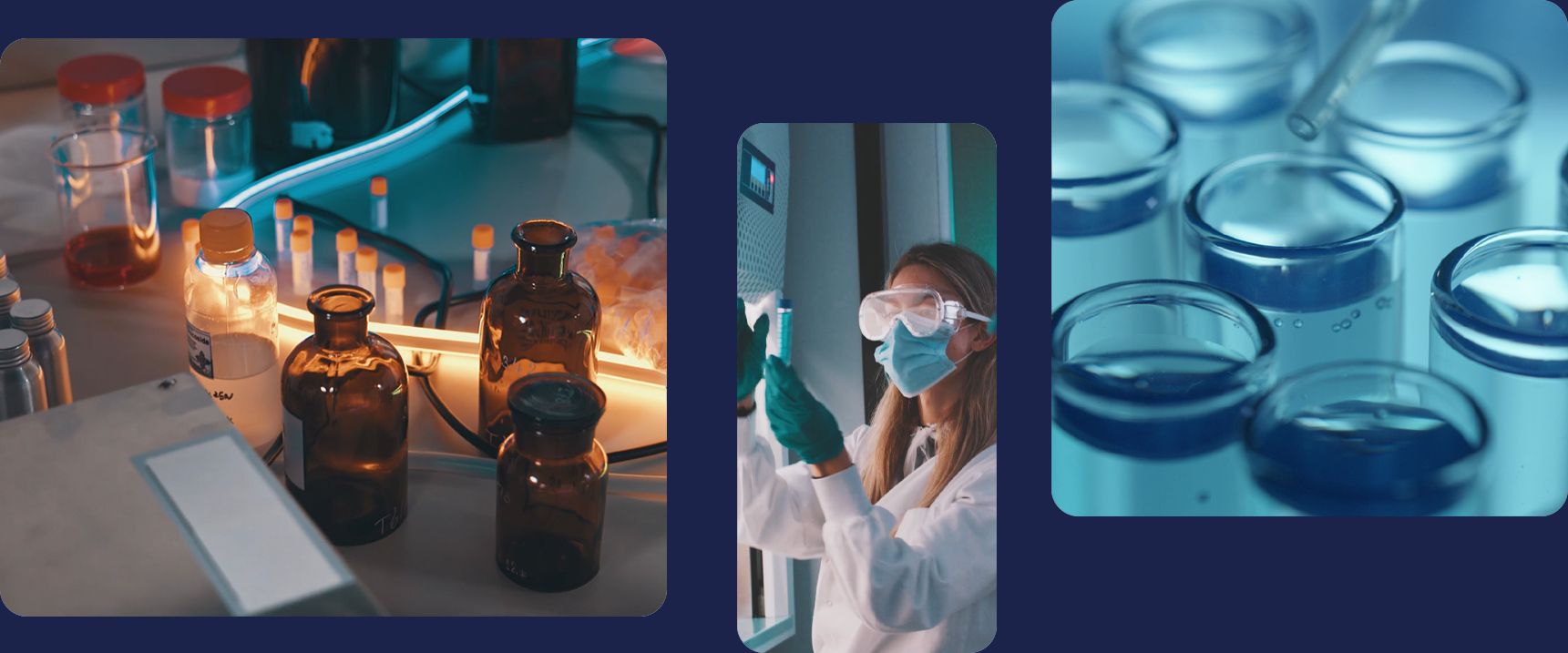
Suitable microtoxic and culture tests (e.g., high hydrostatic pressure)
Description
Microtoxicity and culture tests adapted to specific conditions allow for the evaluation of the toxicity, microbiological efficacy, or environmental compatibility of a product subjected to unusual or extreme environments. These tests are particularly relevant for industries facing challenging operational contexts: deep-sea environments, high-pressure industrial processes, high-salinity matrices, strongly acidic or alkaline media, or high hydrostatic pressure (HHP) sterilization treatments. The objective is to accurately reproduce real-world exposure conditions in order to measure the biological or physicochemical response of a product, microorganism, compound, or formulation.
Principle and operation of adapted tests
Microtoxicity tests generally rely on measuring the inhibition of bioluminescence in microorganisms such as Vibrio fischeri when exposed to a sample. The decrease in luminescence reflects a toxic or inhibitory effect. Culture tests, on the other hand, involve growing microorganisms in the presence of the sample under controlled conditions and then measuring their growth, viability, or metabolic activity. For tests adapted to extreme environments, these methods are modified to incorporate additional parameters such as very high hydrostatic pressure, extreme salinity gradients, significant temperature variations, or atypical pH levels. The equipment used may include pressurized chambers, specialized microbiological reactors, climatic chambers, or continuous culture systems. These tests not only allow for the evaluation of the microorganisms' reaction but also determine whether the formulation or compound being analyzed retains its properties under these specific conditions.
Industrial and regulatory interest
Adapted microtoxicity and culture tests are essential for industries facing complex environmental or health constraints. In the maritime and oceanographic sectors, they allow for the evaluation of a product's toxicity under conditions similar to those found in abyssal environments, where pressure can reach several hundred bars. In industrial processes, particularly for high-pressure processing (HPP) sterilization technologies, they validate the antimicrobial efficacy and stability of formulations exposed to high pressures. For the chemical and environmental industries, tests in high salinity or extreme pH conditions are indispensable for predicting the biodegradability, dispersion, or ecological impact of a product released into atypical environments. Manufacturers of biotechnology and microbial treatments use these tests to validate the resistance and performance of specific strains, even under harsh conditions. Finally, for companies engaged in regulatory processes, these tests document the non-toxicity or safety of a product in targeted environments.
Supported matrix types
These tests can be performed on a wide variety of matrices: industrial effluents, chemical formulations, cleaning products, antimicrobials, highly saline water, technical fluids, sludge, biological extracts, materials subjected to high pressure hydrolysis (HPH) processes, microbial supplements, and liquid or solid formulations intended for use in extreme environments. Scientists adapt the experimental conditions to ensure the representativeness of the results and their operational relevance.
Added value YesWeLab
YesWeLab relies on a network of specialized laboratories capable of performing microbiological and ecotoxicological tests under non-standard conditions. These laboratories are rigorously selected for their methodological expertise, the availability of specific equipment, and their compliance with quality standards (ISO 17025, COFRAC). Depending on your sector, your matrix, and your objective (toxicity, performance, stability, compliance), our scientific team identifies the most suitable method and assists you in defining the experimental protocol. Since 2020, YesWeLab has supported manufacturers, engineering firms, and environmental operators in managing their analyses through its digital platform, guaranteeing efficient, transparent, and responsive monitoring. You can also submit specific requirements to us to define a customized test that accurately reproduces your target environment.
Related analyses in the YesWeLab catalog
To complement these tailored tests, several related analyses are available: