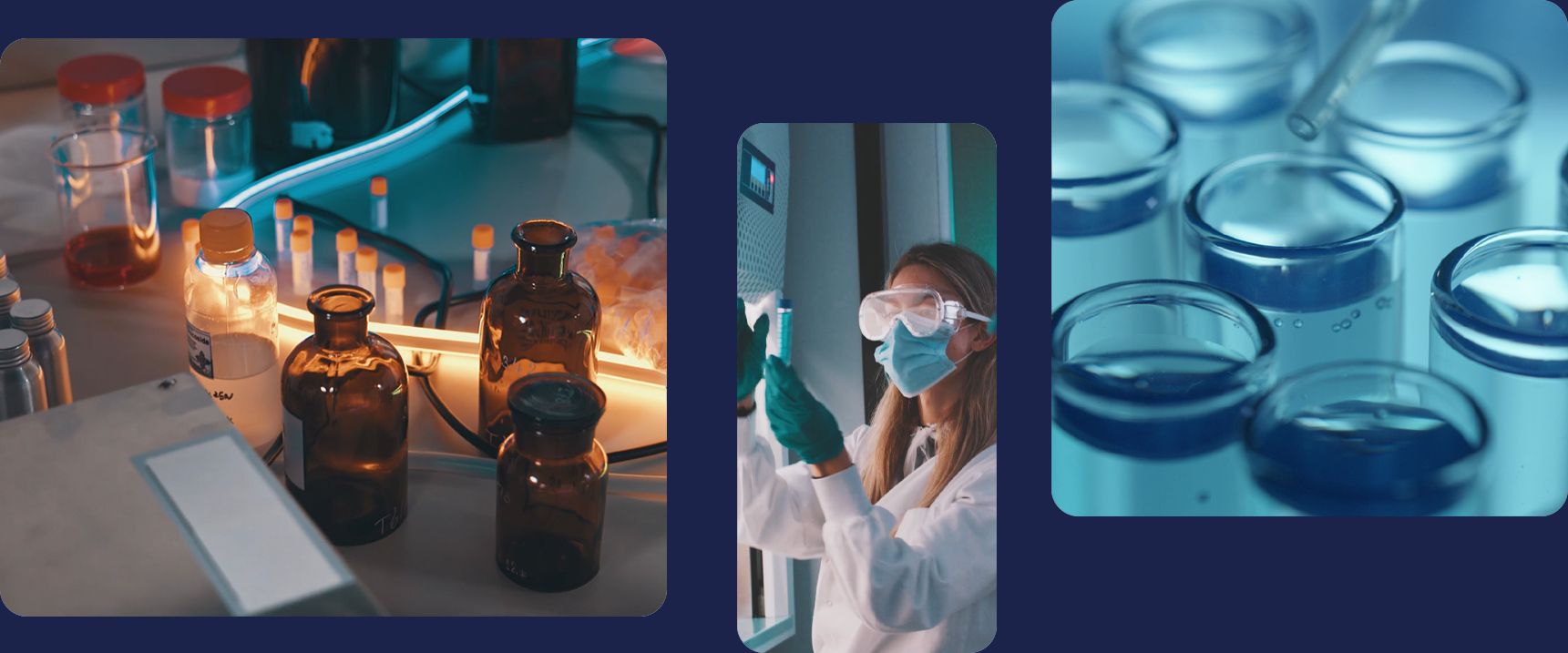
Methane gas measurement
Description
Methane (CH₄) is a organic gas belonging to the hydrocarbon family. It is the main component of natural gas and biogas , but can also be emitted during biological processes (anaerobic fermentation, digestion) or industrial processes (refining, waste storage, chemical processes).
Due to its high global warming potential (GWP = 28 to 34 times that of CO₂) , the accurate measurement of methane has become crucial for the energy, environmental, and agri-food .
Measuring gaseous methane thus allows us to assess:
- The performance of anaerobic digesters and the quality of the biogas produced,
- Leaks or fugitive emissions in industrial processes,
- The composition of fermentation or packaging gases,
- Environmental monitoring of emissions into the air, soil or effluents.
Analytical methods for measuring methane
At YesWeLab, the measurement of gaseous methane is carried out by gas chromatography (GC) , a reference method for the separation and quantification of volatile compounds.
The main approaches used are:
- GC-TCD (thermal conductivity detector) : a robust and universal method for measuring methane in gas mixtures or biogas without complex pretreatment.
- GC-FID (flame ionization detector) : a technique adapted to matrices containing light hydrocarbons for finer quantification.
- GC-MS (gas chromatography coupled with mass spectrometry) : recommended for complex samples requiring specific identification of methane or its associated compounds (ethane, propane, CO₂, H₂S).
These analyses are carried out according to international standards such as ISO 6974-1:2012 (analysis of natural gas by chromatography), ASTM D1945 , or EN 15446 for fugitive gas measurements.
Industrial and environmental applications
Methane measurement is used in many fields:
- Biogas and energy recovery : monitoring of production and yield of methanizers, evaluation of the calorific value of biogas.
- Food processing industry : control of gaseous emissions during fermentation, storage or packaging under a protective atmosphere.
- Environment and climate : measurement of methane emissions in the air, soil and water, particularly in wastewater treatment plants, landfills or agricultural operations.
- Packaging and materials : detection of permeability or gas release in polymer films used for food packaging.
Regulatory framework and compliance issues
Methane monitoring is governed by several mechanisms:
- European Directive 2010/75/EU (IED) on industrial emissions,
- Regulation (EU) 2018/842 on greenhouse gas emission reductions,
- ISO 14064 standard on the quantification and verification of greenhouse gases.
The industries concerned must measure, report and reduce their CH₄ emissions , as part of their environmental commitments or ISO 14001 certifications.
Affected matrices
- Biogas, natural gas and fermentation gas
- Packaging atmospheres and storage chambers
- Gaseous effluents, ambient air, or environmental samples
- Polymer materials and containment systems
Recommended Related Analyses
For a complete assessment of gaseous composition and material behavior, YesWeLab recommends combining methane measurement with other complementary analyses:
- Carbon dioxide (CO₂) analysis : an essential joint measurement in biogas and fermentation processes.
- Ethane and propane analysis : characterization of light hydrocarbons in natural and industrial gases,
- Permeability testing of polymer films : control of airtight packaging,
- Thermogravimetric analysis (TGA) and DSC : characterization of materials subjected to gas release.
YesWeLab Expertise
Since 2020, YesWeLab has been supporting companies in managing and conducting their environmental and industrial analyses .
Thanks to a network of accredited partner laboratories (ISO 17025, COFRAC) and its digital platform , YesWeLab simplifies the ordering, tracking, and delivery of analyses.
- Rapid sample handling
- Selection of the laboratory best suited to the matrix,
- Reliable and traceable results in accordance with international standards.
Need to measure the methane content in your gaseous samples or materials?
personalized quote now from the YesWeLab .
Other analyses we perform
Similar products
-

Thermal degradation analysis
Thermogravimetry (TGA / ATG), Differential Scanning Calorimetry (DSC)
-
Specific heat analysis
Differential scanning calorimetry (DSC)
-
Heat capacity analysis
Differential scanning calorimetry (DSC)