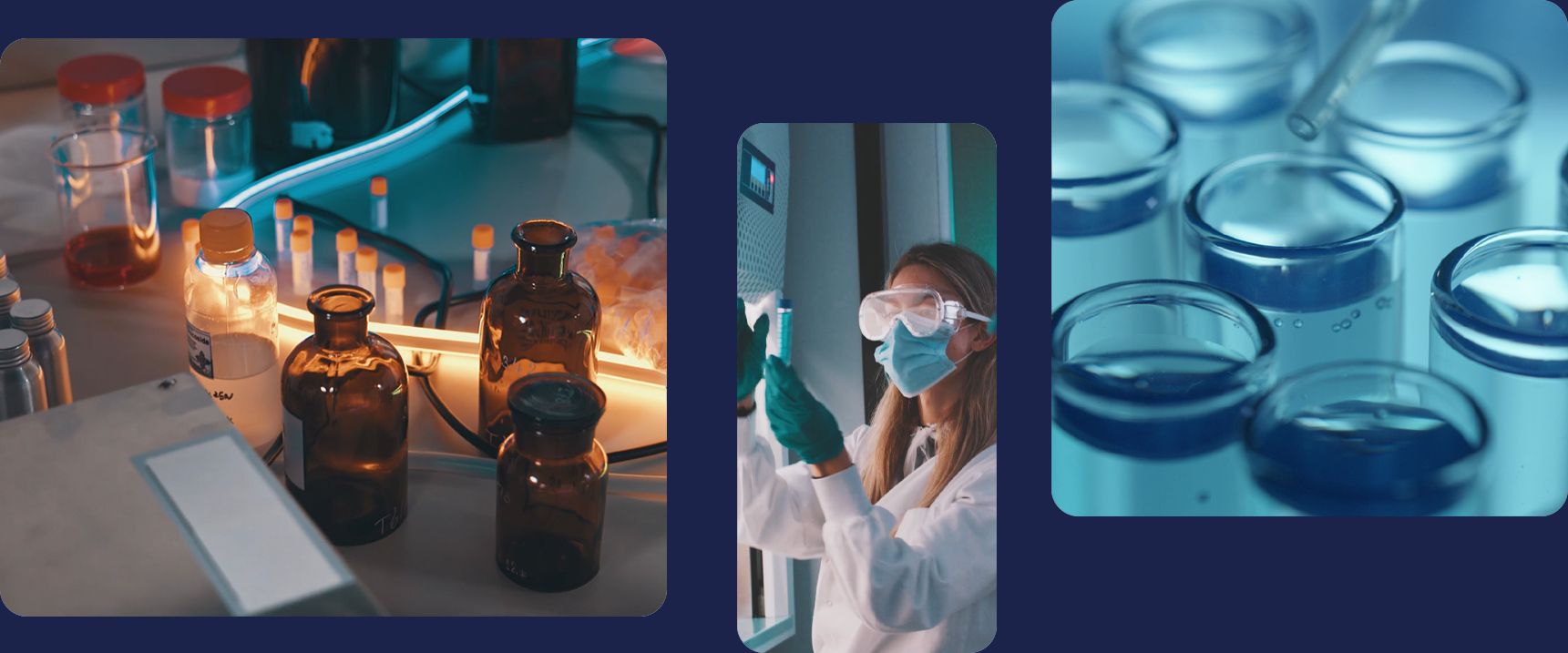
Polymer characterization
Description
Polymer characterization encompasses a range of physicochemical analyses designed to evaluate the thermal, structural, chemical, and mechanical properties of polymer materials. It allows for the identification of a polymer's nature, the determination of its thermal transitions, and the assessment of its stability, crystallinity, and surface morphology. Essential for materials science and control, this characterization applies to engineering plastics, packaging, composites, rubbers, and cosmetic formulations alike.
In an industrial context where the performance and conformity of materials are strategic issues, the characterization of polymers provides essential data for the development of new products, quality control and regulatory validation.
Why characterize a polymer?
Polymer characterization serves multiple industrial purposes. It allows verification of the composition and identity of a material, control of the reproducibility of a production, diagnosis of a failure or degradation, and validation of compliance with regulatory requirements applicable to materials in contact with food (Regulation (EU) No 10/2011) or restricted substances (REACH, RoHS).
It intervenes at all stages of a material's life cycle: selection of raw materials, development and formulation, optimization of shaping processes, quality control in production and analysis of non-conformities or aging.
What techniques are used for polymer characterization?
The characterization of polymers involves a set of complementary techniques, chosen according to the properties to be evaluated.
Differential scanning calorimetry (DSC) allows the determination of the material's characteristic temperatures (glass transition, melting, crystallization) as well as their associated enthalpies. Thermogravimetric analysis (TGA/ATG) assesses thermal stability, filler content, moisture content, and volatile compound content by measuring mass loss as a function of temperature. X-ray diffraction (XRD) provides information on the polymer's crystalline structure and degree of crystallinity, while scanning electron microscopy (SEM/SEM) offers detailed observation of surface morphology, fractures, and fillers.
These techniques are frequently combined with FTIR spectroscopy for chemical identification, as well as mechanical tests (tensile, flexural, hardness) and surface measurements (wettability, abrasion) to obtain a complete characterization of the material.
Which sectors are affected?
Polymer characterization is primarily relevant to the packaging, materials, and polymers sectors, where understanding material properties is crucial for product quality, safety, and durability. The plastics, automotive, aerospace, medical device, cosmetics, and food industries also utilize it to qualify their materials and ensure regulatory compliance.
Additional analyses
For in-depth characterization of your materials, polymer characterization can be complemented by other analyses available in our catalog:thermogravimetric analysis (TGA/TGA) for thermal stability,dynamic mechanical analysis (DMA) for viscoelastic behavior and precise detection of the glass transition,heat capacity analysis for thermal behavior, andsurface tension analysis for surface and wettability properties. All of these services are presented in our analysis catalog.
Perform your polymer characterization with YesWeLab
At YesWeLab, we collaborate with a rigorously selected network of laboratories, most of which are certified and/or accredited (ISO 17025, COFRAC, etc.). These laboratories are chosen based on your specific needs, the matrices to be analyzed, and the required analytical techniques or methods.
If you have specific requirements, please do not hesitate to specify them in your request: our scientific team will do everything possible to respond accurately and promptly. You will also benefit from access to a catalog of over 10,000 analyses as well as personalized scientific support throughout your project.
Since 2020, many manufacturers, distributors and design offices have trusted us to manage their analyses, entrusting us with their samples via our digital platform.
To learn more or to submit a specific need, contact our team now.
Other analyses we perform
Similar products
-

Analysis of the thermal expansion of liquids
Dilatometry
-
Analysis of thermal capacity
Differential scanning calorimetry (DSC)
-
Elasticity analysis
Dynamic mechanical spectroscopy (DMA), Mechanical testing